
Nonprofit Spotlight: Akron Blind Center
When LaJohn Ellies Jr. sustained an injury due to gun violence, he found himself in a deep depression. "Five years ago, I was accidentally shot in the head. The bullet went through my right ear and traveled out my left eye, and I totally lost my left eye and hearing in my right ear," Ellies said. "I didn't want to interact with anybody or communicate or anything."
Learning about the Akron Blind Center renewed his sense of purpose. "I came to the Blind Center and never left. It just became my second home," said Ellies, who is known affectionately as "BAM" among his fellow members of the Blind Center.
For more than 75 years, the nonprofit has served people who are visually challenged through an array of programs that build skills, confidence and connection. These services include Braille and computer classes, job training, life skills assistance, volunteerism, and even creative outlets like crafting workshops where members and volunteers make winter hats for children in need. Most importantly, the Akron Blind Center provides a place to socialize and connect.
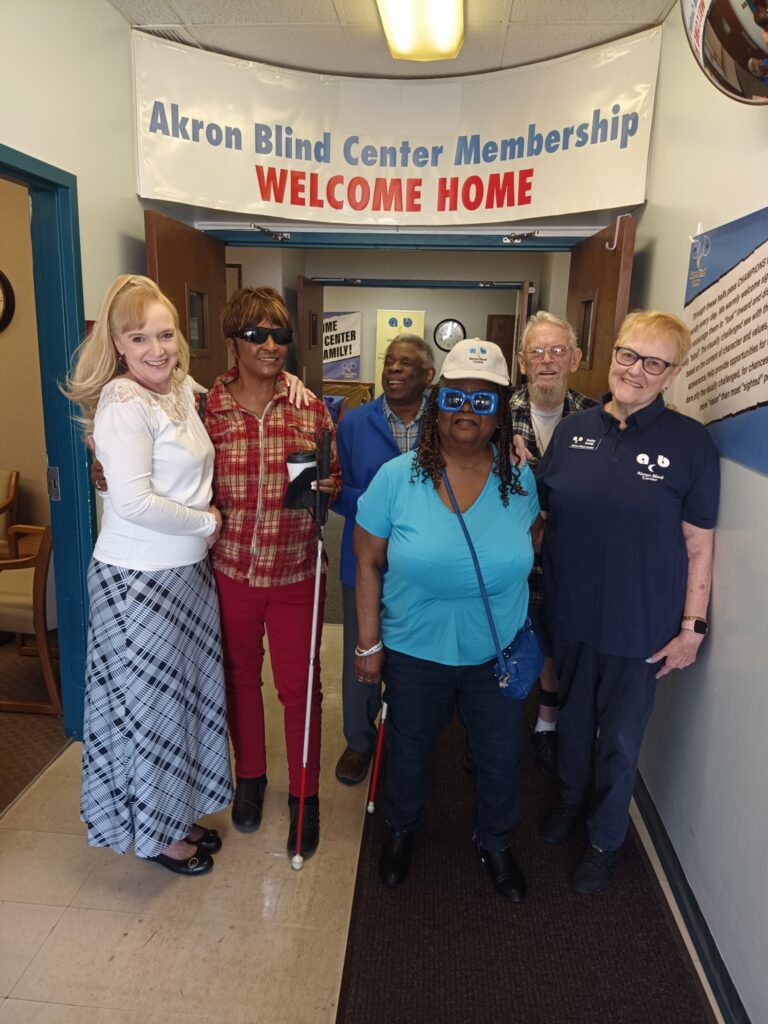
Ellies and other members of the Blind Center compare the organization to a family, where even first-time visitors to the nonprofit's East Market Street headquarters are offered a warm welcome.
"I participate in the Akron Blind Center because I think it was my calling," said Jerry Fowler, who has volunteered at the organization for nearly 10 years. "I love volunteering, and I love helping people." One of Fowler's favorite aspects of the Akron Blind Center is laughing and singing with other members during lunchtime.
When asked if there's something he'd like sighted people to know, Fowler said, "The one thing I wish that sighted people would learn is we can do the same things that they can do, but only in a different way."
"I think people gain such a great appreciation for things in life when something is taken away from them," said Scott Reisberg, inspired executive director of the Akron Blind Center. "They appreciate everything they have because they have to; a sighted person doesn't have to immerse themselves in the world of the visually challenged."
Reisberg said one challenge with new members is they often experience "stages of loss, shock, anger, denial and negotiation" after becoming visually impaired.
"Maybe down the road they'll get to that point of acceptance, but that's not as important as learning how to go through life and deal with your challenges," Reisberg said. "It doesn't have to limit you."
To help build empathy among the sighted community, the Akron Blind Center hosts an annual White Cane Experience fundraiser, during which participants are blindfolded and "walk in the shoes" of people who are visually impaired.
Karen Grantham, who has been visually impaired since 2008, said she felt the positive presence of the Akron Blind Center instantly. "This is a place where I can relax, and I don't have to worry about anything because there are people here like me," said Grantham, who is a longtime member and leader at the Akron Blind Center. "They get me, and I get them, so this is definitely a second family."
You can support the mission of the Akron Blind Center by donating, volunteering or making a gift to the nonprofit's endowment fund. To learn more, visit akronblindcenter.org.