
2025 Forum: Understanding & Addressing Domestic Violence
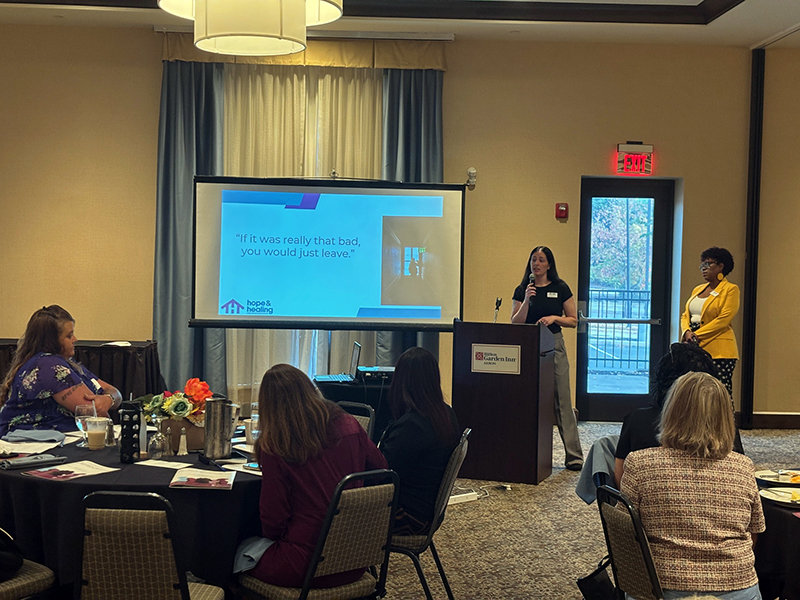
Held biennially, the Women's Endowment Fund's Forum on Women & Girls fosters dialogue on issues impacting women and girls, guiding WEF's grantmaking priorities. The 2025 Forum focused on safety from violence, with a goal to raise awareness, dismantle stereotypes, and promote collaboration among community stakeholders.
The fund was honored to welcome two distinguished leaders from the Hope & Healing Survivor Resource Center as its keynote speakers: Chief Executive Officer Teresa M. Stafford-Wright and Chief Program Officer Ashley Kline. Together, they represented the transformative mission of an organization that has offered a full continuum of care for survivors of domestic violence, sexual violence, and human trafficking for over 50 years.
The Forum was attended by nearly 100 individuals. In one exercise, attendees identified stereotypes associated with survivors of domestic violence or intimate partner violence (IPV). Speakers underscored the importance of addressing these stereotypes and providing comprehensive support to survivors. By fostering a deeper understanding of the complexities surrounding domestic violence, attendees were empowered to create a more supportive environment for those impacted.
The Consequences of Intimate Partner Violence
The consequences of IPV are far-reaching. Nationally, IPV is responsible for an estimated 1,200 women's deaths annually in the United States, with young women and marginalized populations at highest risk. Homicide is the leading cause of death among pregnant and postpartum women in IPV cases. Over two-thirds of IPV homicides involve a firearm, and the rate of firearm-involved IPV homicides has increased in recent years.
The economic burden is substantial, with IPV costing the U.S. economy billions of dollars each year through healthcare expenses, legal costs, mental health services, and lost productivity. In Ohio, approximately 188,000 survivors are victimized each year. These statistics underscore the importance of prioritizing safety from violence in our grantmaking efforts.
Addressing Intimate Partner Violence
It is evident that addressing IPV at its roots requires systemic change and coordinated community action. This encompasses:
- Advocacy for policy reform
- Investment in prevention and victim services
- Transformation of cultural norms to challenge victim-blaming attitudes
- Collaboration among law enforcement, healthcare providers, educational institutions and faith leaders
- Inclusion of survivor voices in policy development
Key takeaways from the Forum guided this year's grantmaking decisions. Read the detailed Forum Report at akroncf.org/WEFForumReport.